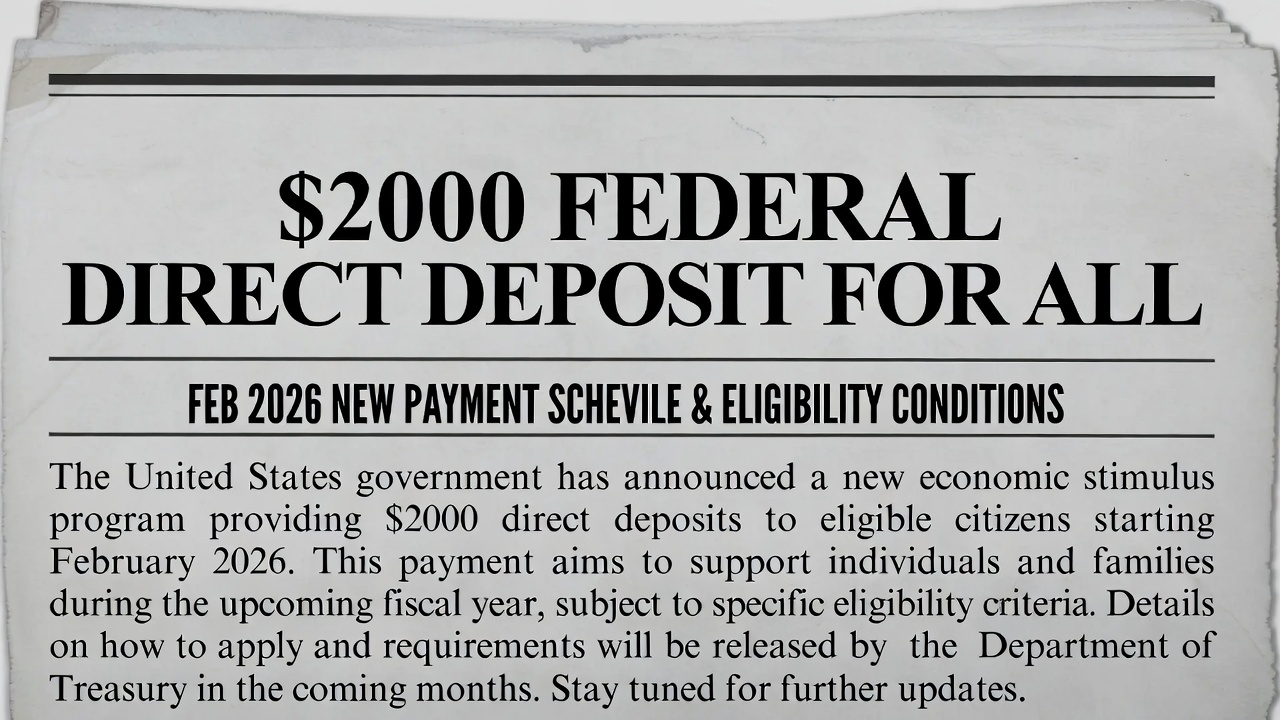
$2000 Federal Direct Deposit for All: As the United States moves further into 2026, talk of a possible $2,000 federal direct deposit has once again gained attention. Many Americans are seeing posts online claiming that everyone will receive this payment. For households struggling with rising rent, grocery bills, and healthcare costs, this idea brings hope and comfort.
At the same time, confusion is spreading quickly. Unlike the stimulus checks issued during the pandemic, this payment has not been officially approved. What exists right now is discussion, not confirmation. February 2026 is mentioned often, but no date has been formally announced.
Why the $2,000 Payment Is Being Discussed Again
The renewed interest in direct cash payments comes from ongoing financial pressure faced by millions of Americans. Even though inflation has slowed, everyday expenses remain high. Many families feel that their income no longer stretches far enough to cover basic needs.

People living on fixed incomes or paycheck to paycheck feel this pressure most strongly. Supporters of direct payments argue that cash relief is simple and fast. Unlike complicated programs, a direct deposit allows people to decide how best to use the money.
Economic Stress Keeps the Idea Alive
The idea of direct payments tends to return whenever financial stress remains widespread. Groceries, housing, insurance, and medical costs continue to rise faster than many wages. This gap has made it harder for families to recover financially.
Because of this, lawmakers continue to revisit the idea of one-time payments. Even without formal approval, the discussion reflects real struggles faced by many households. It also explains why rumors gain traction so easily during uncertain economic times.

The Political Factors Behind the Proposal
Politics play a major role in keeping the $2,000 payment idea in public view. With elections approaching, leaders are paying closer attention to voter concerns about the cost of living. A flat payment is easy to explain and easy for the public to understand.
Supporters believe that direct deposits provide immediate relief and build trust. Critics argue that these payments may be more symbolic than effective. This political divide has kept the idea alive while slowing any final decision.
Where the Proposal Stands Today
As of now, no law has been passed to approve a $2,000 federal direct deposit. Congress has not voted on a finalized bill, and no federal agency has released an official plan. Without legislation, no payments can be sent.

Most online claims are based on early policy discussions or draft ideas. These conversations do not guarantee action. Many proposals change or disappear entirely during negotiations, especially when budget limits and spending concerns arise.
Why February 2026 Is Frequently Mentioned
February 2026 is often mentioned because it fits well within the federal calendar. It follows the start of the new budget year and overlaps with tax filing season. The IRS already processes millions of payments during this period, making the timing seem practical.
However, practical timing does not mean approval. Even if February is discussed as a possible window, delays are common. Political disagreements and budget debates can easily push decisions further into the year.

Who Might Be Eligible If Approved
If a $2,000 payment were eventually approved, it would likely not go to everyone equally. Despite claims that it would be “for all,” most serious proposals include eligibility rules. These often involve income limits and tax filing status.
Citizens and legal residents with valid Social Security numbers would likely be prioritized. Payments would probably be based on recent tax returns or benefit records. Seniors receiving Social Security and individuals on SSI or SSDI are often included in draft discussions.
How Payments Would Likely Be Delivered
If authorized, the payment would likely be sent using existing federal systems. Direct deposit would be the fastest method, using bank information already on file with the IRS or Social Security Administration.

People without direct deposit information would likely receive paper checks or prepaid debit cards. These options usually take longer and may face delays. Keeping personal and banking information updated helps avoid problems if any payment is approved.
Reasons Supporters Back the Payment
Supporters believe a $2,000 payment could offer meaningful short-term relief. The money could help families pay overdue bills, manage rent increases, or cover medical expenses. Even temporary assistance can reduce financial stress.
Some also argue that local economies could benefit from increased spending. In areas where recovery has been slow, a cash boost could help small businesses. Supporters see the payment as relief, not a long-term solution.
Concerns Raised by Opponents
Opponents raise several concerns about broad cash payments. Some economists warn that sending money to many households could add inflation pressure if supply remains limited. Others believe targeted aid would be more effective.
Federal debt is another concern. Critics question how such a program would be funded and whether it would add long-term strain to government finances. These concerns have made lawmakers cautious about moving forward.
What Americans Should Do Right Now
For now, caution is the best approach. No one should plan their finances around an unapproved payment. Social media claims promising guaranteed money should be treated carefully and verified through official sources.
Practical preparation is still useful. Filing taxes on time, checking direct deposit details, and keeping addresses updated are smart steps regardless. If a payment is approved, official announcements will be clear and widespread.
Understanding the Reality Behind the Headlines
The idea of a $2,000 federal direct deposit reflects real financial challenges faced by many Americans. However, no payment has been approved at this time. February 2026 remains a possibility, not a promise.
Knowing the difference between discussion and confirmed action helps avoid disappointment. Relying on official updates from government agencies remains the safest way to stay informed during uncertain times.
Disclaimer
This article is for informational purposes only and does not provide financial, legal, or tax advice. As of 2026, no $2,000 federal direct deposit has been legally approved. Eligibility rules, payment timelines, and program details may change if legislation is introduced or amended. Readers should rely on official announcements from the U.S. Congress, Department of the Treasury, IRS, and Social Security Administration for accurate and up-to-date information.